

Virtual Public Consultation
Land at Station Road, Fernhill Heath, Worcester
Welcome to this Virtual Public Consultation website, relating to the proposed development of up to 150 new, high-quality homes, open spaces and associated infrastructure on land at Station Road, Fernhill Heath.
At least 40% of the new homes will be affordable. The site comprises two parcels of land located to the northern edge of the village to the west of the railway line. The two land parcels sit either side of Station Road and extend to approximately 6.97 hectares.
The purpose of this consultation is to keep local people informed and to gather feedback on the emerging design and parameters of the proposed development.
All comments will be carefully considered and may result in changes to the proposals. Once the application is submitted, there will be a formal consultation conducted by Wychavon District Council where you will be able to make further comments if you wish.
Background
The developer, Lovell Partnerships Ltd now wish to bring forward this development and welcome your views before submitting an outline application.
The site has been actively promoted for inclusion in the South Worcestershire Development Plan because there is a substantial need for new housing in Wychavon as it's one of the least affordable districts in the West Midlands. The site is not in Green Belt as it is to the west of the railway line. The site itself is also not constrained by any heritage assets (such as Conservation Area and Listed Buildings), Flood Zone 2 and 3, Ancient Woodland or ecology and landscape designations. The site is located in open countryside outside of the development boundary for Fernhill Heath and is not covered by the Neighbourhood Plan.
The Proposed Development
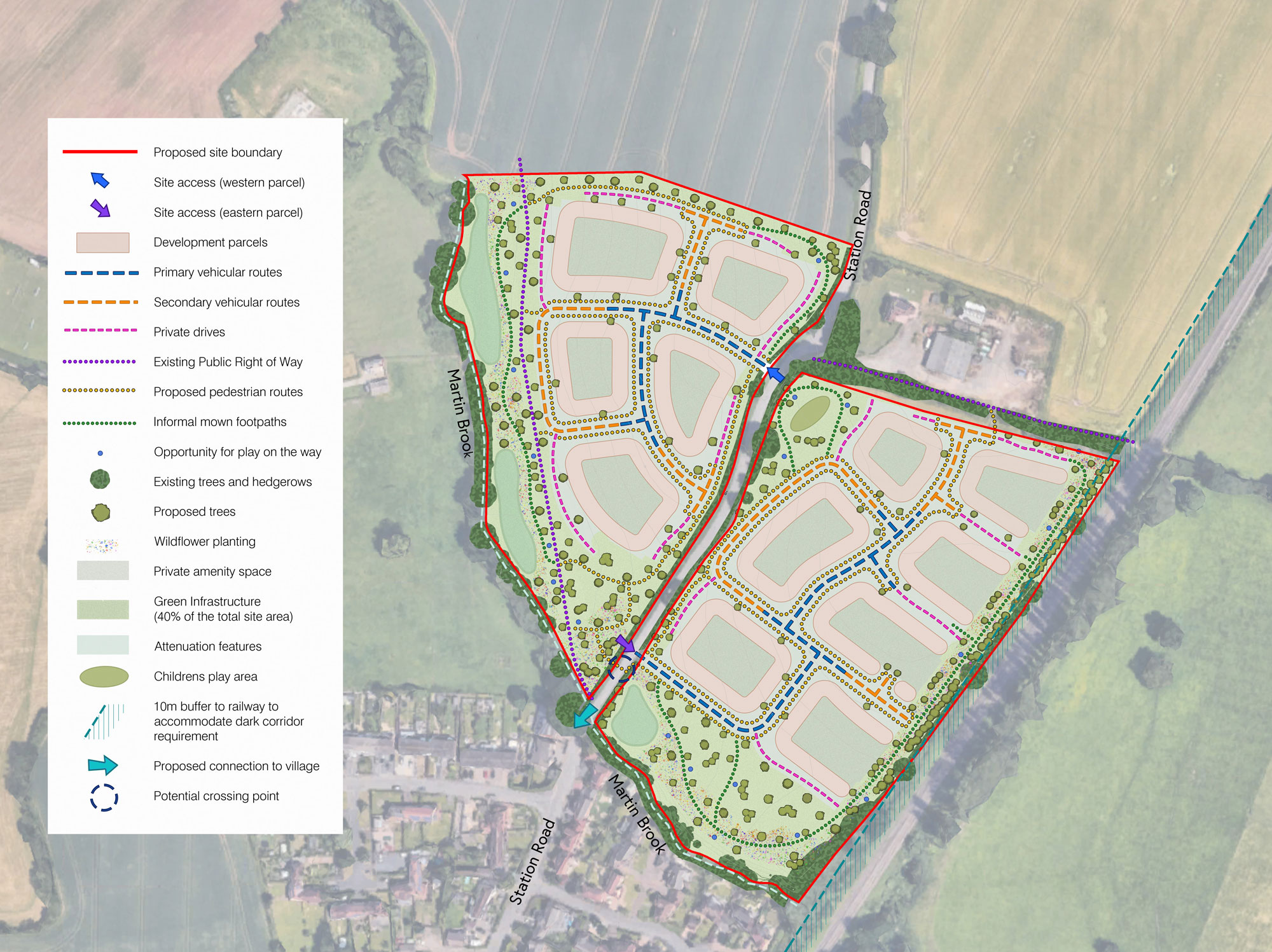
The new homes would be accessed off Station Road. The Indicative Layout proposes pedestrian/cycle connections off Station Road that will link through the development and also link to the proposed public open space. The proposals include several substantial areas of public open space throughout the site along with attenuation ponds (for surface water) and a play area. Lovell Partnerships have provided an initial concept plan which can be seen below.
The proposal aims to deliver a mix of homes to accommodate all family sizes in a mix of tenure types and would include a variety of dwelling sizes (including 1, 2, 3, 4+ bed homes).
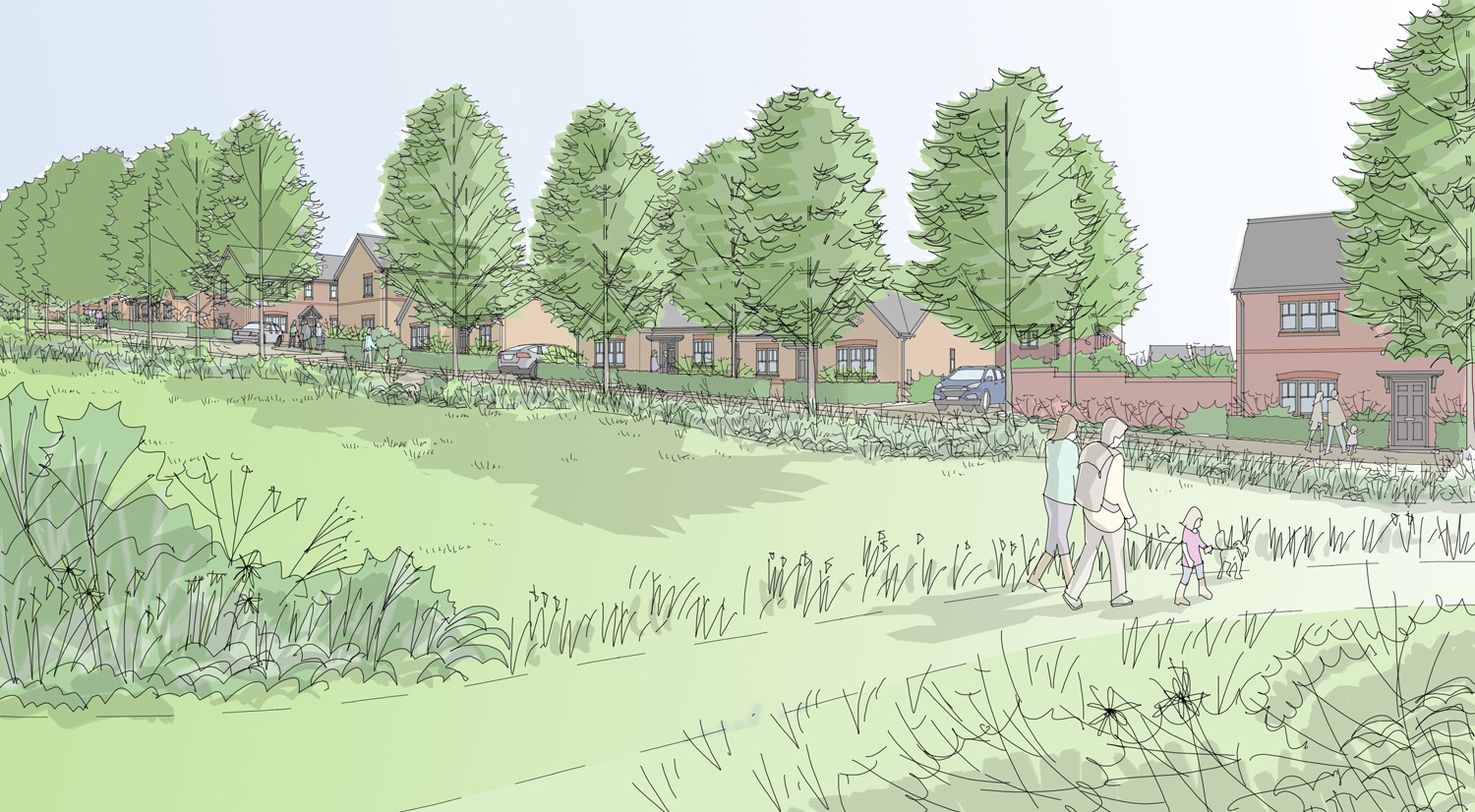
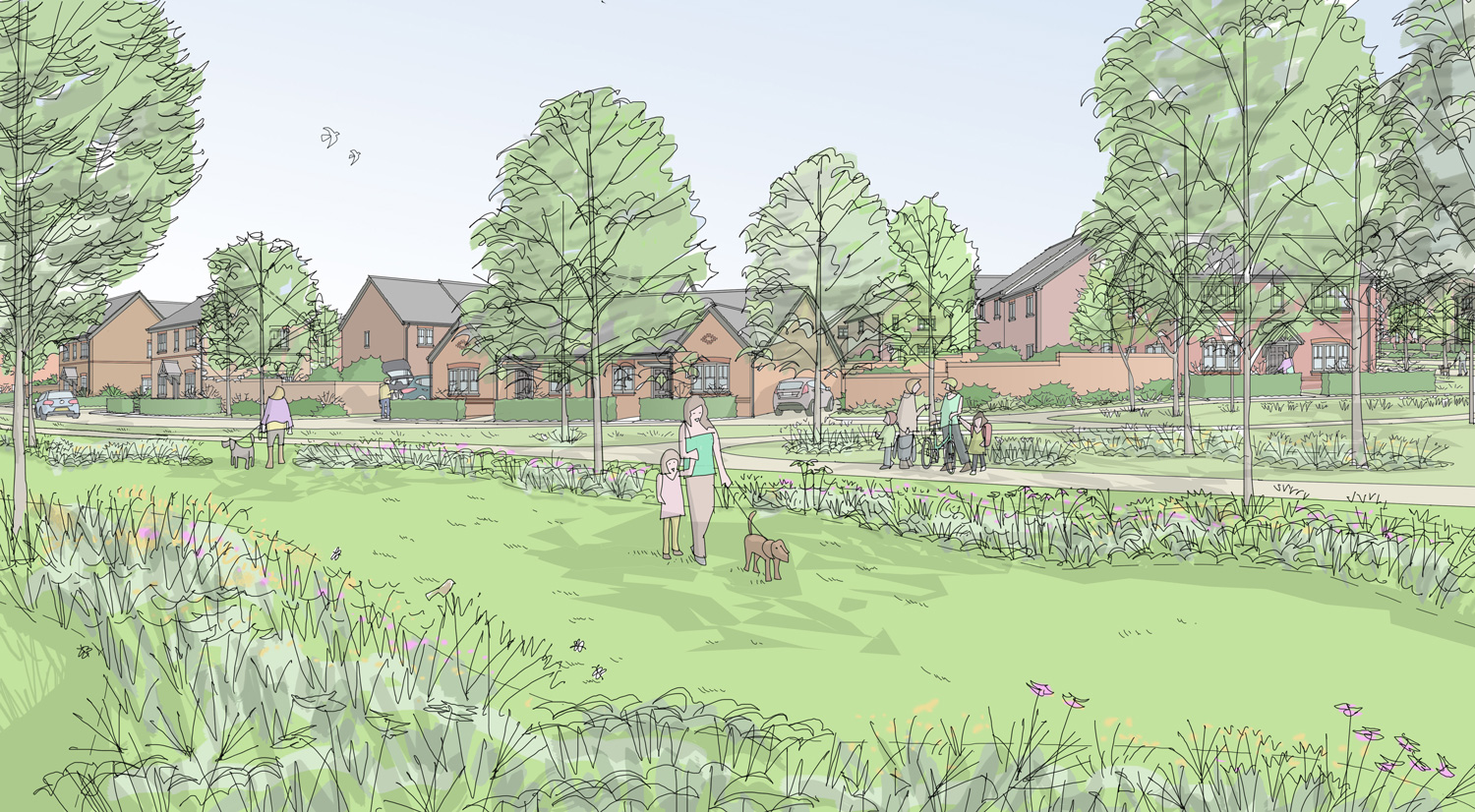
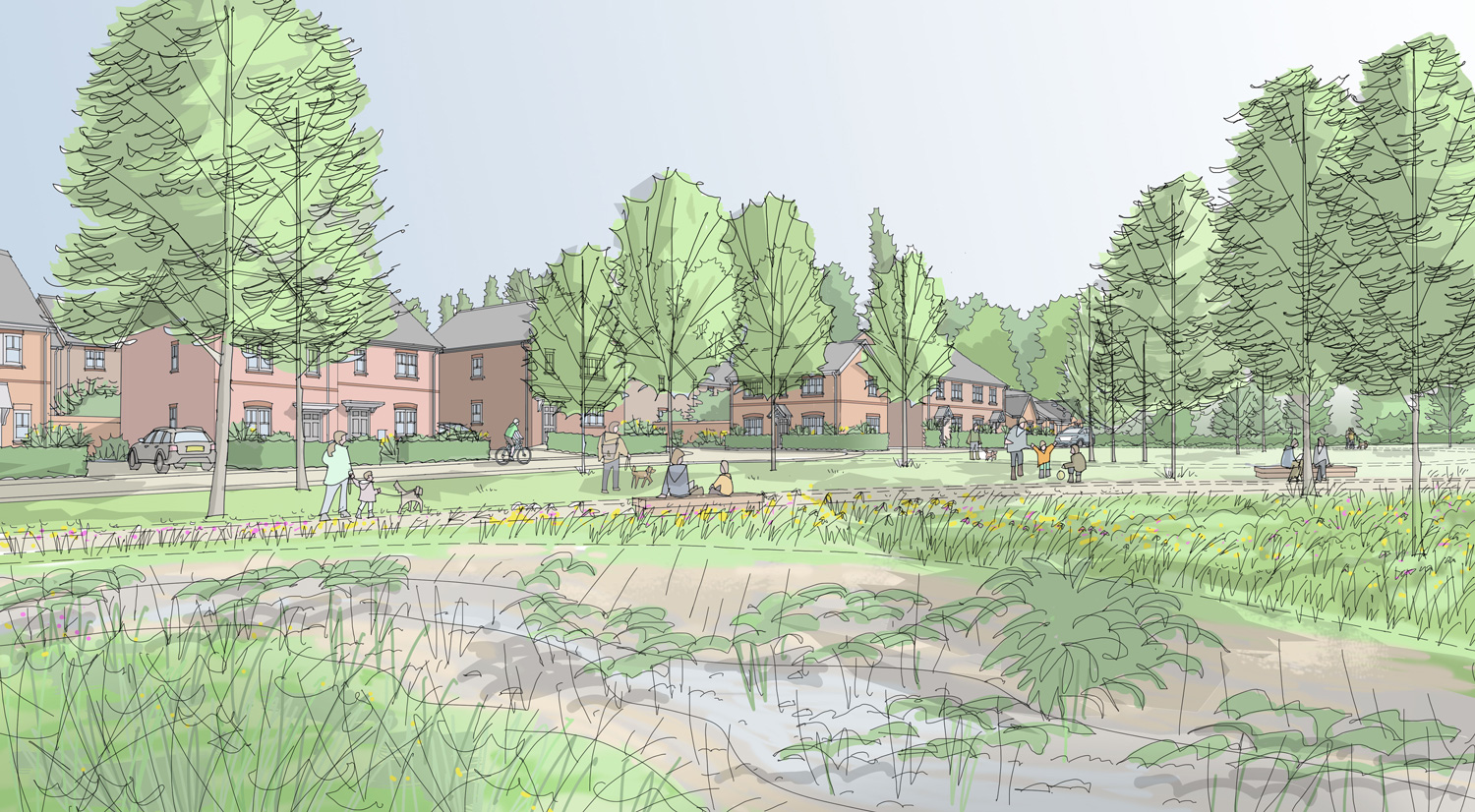
There will be significant areas of new landscaping which will complement the character of the area and provide a boost to local biodiversity through the creation of new habitats and wildlife corridors.
Appreciating that the site is currently two undeveloped agricultural fields, the vision is to deliver a landscape-led, high quality development that follows the principles of good placemaking. The proposed development will provide generous public open space for informal recreation and enjoyment by the local community, with high visual amenity and enhanced biodiversity (by a minimum of 10%).
We appreciate that there will be concerns over the impact that the new development will have on the village and the demand for services. This is totally understandable.
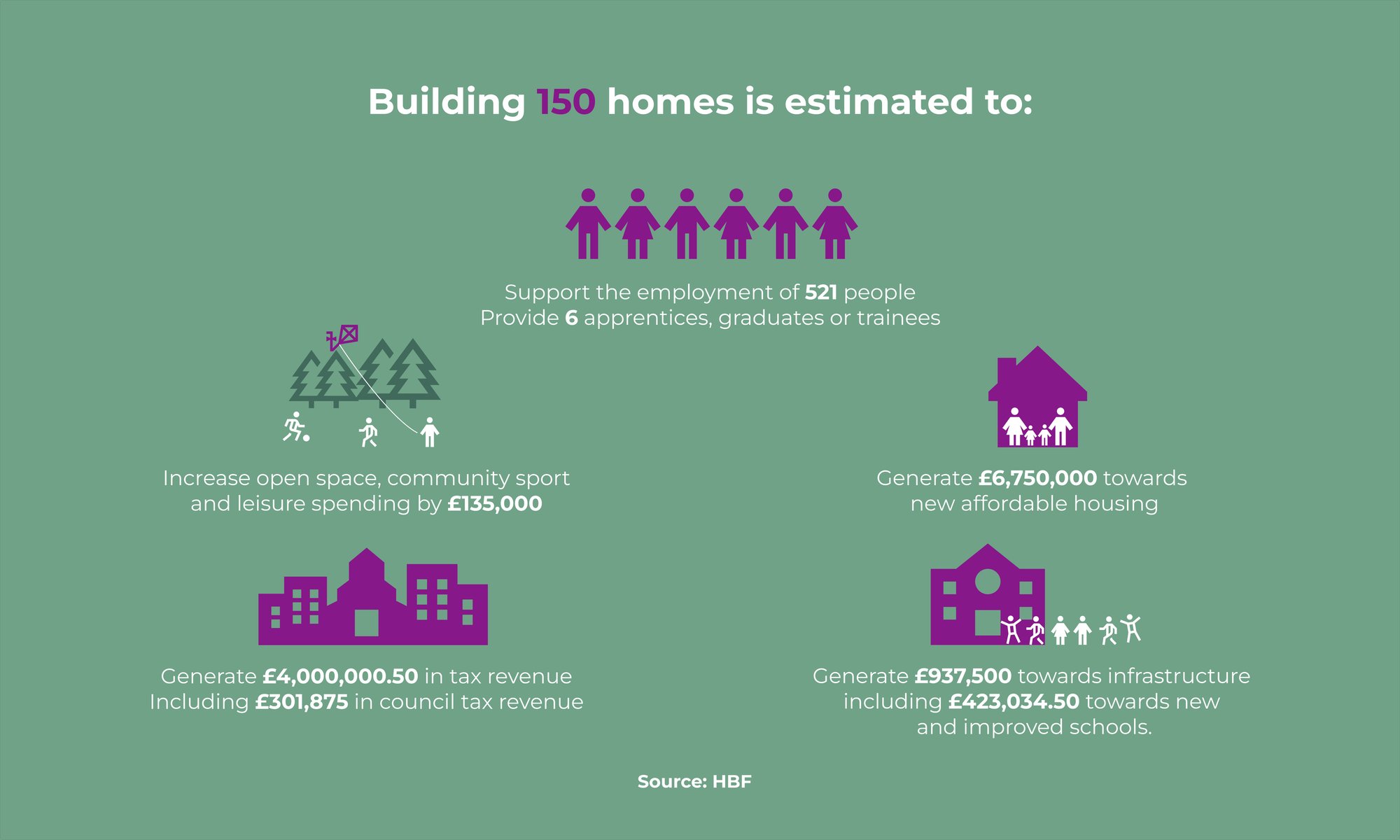
New developments pay substantial sums of money towards upgrading, improving and in some cases introducing new community services and facilities via Section 106 Agreements and Community Infrastructure Levy. This money is collected by the local council. These payments can be towards education, public transport, libraries, sports facilities (indoor and outdoor), open space and open space maintenance, highways improvements (pothole repair, improving junctions, new crossing facilities, etc), healthcare (including NHS contributions), public art, waste disposal and even flood and biodiversity management in some cases. New developments are beneficial to a local area in far more than just creating jobs and local investment in trades.
The image below is taken from the Home Builders Federation (HBF) development benefits calculator which provides details of the considerable benefits of the scheme:
If you would like to provide your views and comments on the scheme, please complete and submit the consultation response form. All feedback is anonymous, and we do not request your details as part of this process. Please note you will have a further opportunity to make comments on the application once it is submitted to the council.
Please select the appropriate answer that best represents your views. Once completed, we will review all comments and include them in a Statement of Community Involvement which will then be submitted with the application. All comments will be taken into consideration and the feedback we receive may result in changes being made to the proposed scheme.
If you would like to get in touch with any specific questions, please feel free to contact us on consultations@rcaregeneration.co.uk or on 01905 887686.
Please submit your response by 13th March, 2026.
Thank you for your time.
Survey
Copyright Notice
All rights reserved, Plans, drawings, documents and other material (included those published online) are protected by the Copyright, Designs and Patents Act 1988. This means that the copyright owner has the exclusive right to copy, distribute, broadcast or adapt their work. No part may be reproduced, stored in a retrieval system, or transmitted, in any form or by any means, electronic, mechanical, photocopying, recording or otherwise, without prior permission of the copyright owner. In the case of the material hereby published, permission is given for personal viewing for consultation purposes only.
Initial Concept Plan
Definitions
Site Layout/Initial Concept Plan - A preliminary, conceptual, or illustrative design used in the early stages of a project to show how a site or project might be developed.
Open Market Housing - Residential properties available for purchase or rent without restrictions on who can buy them, generally sold at full market value determined by supply and demand.
Affordable Housing - As per Annex 2 of the NPPF, affordable housing is ‘housing for sale or rent, for those whose needs are not met by the market’.
Social Rent - Provided by local authorities and registered providers, this is the most affordable rented tenure, typically set at 60% of open market (private) rent.
Affordable Rent - Again, provided by local authorities and registered providers. This is a rented tenure, set at no more than 80% of open market (private) rent.
Shared Ownership - This is an ‘intermediate’ tenure, designed as an affordable route to home ownership. The occupier buys a proportion of the property and pays rent on the remainder, typically to a housing association. As you are only buying a proportion of the house, it can be easier to obtain a mortgage.
First Homes - A discounted market sale housing, but still regarded as ‘affordable housing’ for planning purposes. These are typically market sale units which are discounted by a minimum of 30% of market value. They remain affordable in perpetuity, which means the discount is passed on at each sale. They are price capped at £250,000 outside of Greater London.
Rent to Buy - This tenure allows you to rent a home at c. 80% of market rent (similar to affordable rent) but it’s part of a structured program which gives you the opportunity to save and then purchase the house after 5 years.
Owner Occupier - For our purposes, owning the property, with or without a mortgage.
Private Rent - A property rented at full market rates, typically owned by a private individual or company.
Self or Custom Build - A term which covers a wide range of types, where individuals or communities are involved in the design or managing the construction of their home.
S106 Agreements - S106 Agreements are legally binding, enforceable contracts between local planning authorities and developers in England, mandated under the Town and Country Planning Act 1990. They mitigate the impact of new developments by securing contributions from the developer to improve local infrastructure. These can include affordable housing, schools, health services and transport improvements.
CIL (Community Infrastructure Levy) - The Community Infrastructure Levy (CIL) is a planning charge introduced by local authorities in England and Wales to help fund infrastructure such as schools, transport and health facilities- needed to support new development. It is a mandatory fee paid by developers, usually based on the size and type of new floor space proposed.